

How the Right EHR Platform, Including Within EHR, Helps Practices Reduce Long-Term Costs
Although implementing an EHR involves upfront time and expense, the ongoing cost savings and financial benefits often outweigh those initial investments, especially when the platform is designed to support modern practice needs.
Below, we break down how the right EHR platform including integrated solutions like Within EHR helps practices reduce long-term costs across multiple dimensions.
1. Eliminating Paper-Based Processes
Traditional paper charts and manual filing systems create ongoing costs for paper, printing, storage, and administrative handling. An EHR eliminates:
- Physical storage needs
- Daily tracking and re-filing
This immediately reduces recurring overhead and frees staff to focus on higher-value tasks.
2. Streamlining Administrative Workflows
Modern EHRs automate many repetitive administrative tasks that once required manual effort, such as:
- Appointment scheduling and automated reminders
- Electronic intake and check-in
- Billing and coding generation
- Claims submission and tracking
By reducing manual entry and repetitive workflows, EHRs shorten administrative cycles, decrease the need for extra support staff, and lower long-term labor costs.
3. Reducing Claim Denials and Revenue Leakage
One of the most costly challenges for practices is denied or rejected claims. Integrated billing workflows in advanced EHRs improve documentation accuracy and automate coding checks, leading to:
- Faster reimbursement
Improvements in revenue cycle performance not only increase net revenue but also reduce time spent chasing unpaid claims a direct reduction in operational costs.
4. Cutting Duplicate Testing and Redundant Errors
When different systems or paper records don’t share information, clinicians may accidentally order duplicate tests or repeat procedures.EHRs with comprehensive health records help avoid unnecessary testing by providing instant access to up-to-date patient data. This reduces waste and lowers diagnostic expenses over time.
5. Improving Coding Accuracy and Compliance
EHR documentation tied directly to billing workflows reduces errors that can lead to claim denials or compliance violations. Automated coding suggestions, clinical decision support, and required-field validation help ensure that charges are accurate and defensible reducing costly appeals and regulatory risk.
6. Reducing Transcription and Documentation Expenses
Historically, practices relied on transcription services or staff to convert handwritten notes into digital records. With structured templates and real-time charting tools, modern EHRs significantly reduce or eliminate these expenses. Clinicians can chart directly in the system using efficient, customizable templates, cutting ongoing transcription costs.
7. Cloud-Based Advantages Reduce Infrastructure Costs
Cloud-hosted EHR platforms like Within EHR eliminate the need for expensive on-site servers, hardware maintenance, and dedicated IT teams.Cloud delivery also includes automatic updates, secure backups, disaster recovery, and scalable licensing, reducing the total cost of ownership compared to legacy on-premise systems.
8. Enhanced Compliance Support Lowers Regulatory Risk
Compliance with HIPAA and other regulations is non-negotiable for healthcare practices. EHRs support secure access controls, audit trails, and reporting tools that help practices avoid costly fines and sanctions. With secure, centralized data and automated compliance documentation, long-term legal risk and associated expenses are reduced.
Make Cost Savings Work for Your Practice with Within EHR
The right EHR platform doesn’t just replace paper charts it reshapes how your practice operates. Within EHR combines integrated billing, automated workflows, cloud-based delivery, and real-time data visibility to help practices reduce long-term costs without sacrificing clinical quality or compliance.
Schedule a demo with Within EHR today to learn how a modern, integrated EHR can streamline your operations, cut waste, and deliver long-term financial value. Click Here
Frequently Asked Questions
Q: Are EHR cost savings immediate?
A: Some savings like reduced paper and transcription costs are immediate, while others, such as improved revenue performance and reduced denials, accumulate over time.
Q: How long does it take to see ROI from an EHR?
A: Many practices see positive ROI within 2–3 years when they track key performance and financial indicators.
Q: Do cloud-based EHRs cost less long-term than on-premise systems?
A: Yes. Cloud EHRs eliminate hardware and maintenance costs and scale easily with practice growth.
Q: Can EHRs help reduce compliance risk?
A: Modern EHRs include security and audit tools that support regulatory compliance, reducing the risk of fines and legal costs.
Q: Is billing automation a major contributor to cost savings?
A: Absolutely. Integrated billing automation reduces errors, denial rates, and administrative rework, all of which contribute to long-term savings.
Ready to streamline your practice?
See how Within EHR's AI-native tools can transform your workflow.
Book a demoYou May Also Like

Electronic Health Record Transition and Impact on Screening Test Follow-up
Switching to a new Electronic Health Record (EHR) system is one of the most important and risky transitions a healthcare organization can make.
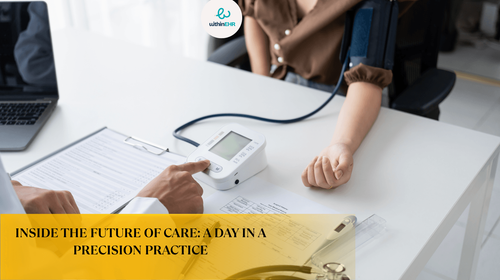
Inside the Future of Care: A Day in a Precision Practice
Healthcare is rapidly evolving toward a model where data, automation, and intelligent digital systems shape everyday clinical decision-making. This shift is transforming traditional offices into what is now known as a precision practice—a modern care environment that leverages integrated technologies to deliver more accurate, efficient, and individualized care.